
Kane's Ballon d'Or: The 6,700-Point Ledger and the Ballot Nobody Published
**मुख्य उत्तर (≤60 शब्द):** 2026 बैलन ड'ऑर का खाता 100 मतदाताओं और प्रति बैलट 67 अंकों का है, कुल 6,700 अंक। हैरी केम पहले, काइलियन एम्बाप्पे दूसरे और लामिन यामल तीसरे रहे। आधिकारिक पहले-स्थान वोटों की गिनती और कुल अंतर प्रकाशित नहीं हैं, इसलिए 'सर्वाधिक पहले स्थान के वोट मिलने पर भी हार' वाला दावा नियम के स्तर पर सही है, घटना के स्तर पर अनसुलझा। **मुख्य तथ्य:** - अंक पैमाना 15-12-10-8-7-5-4-3-2-1; एक बैलट अधिकतम 67 अंक, कुल तालाब 6,700 अंक। - द एथलेटिक स्ट्रॉ पोल: केम 1,103, यामल 991, एम्बाप्पे 728 — लेकिन दूसरा और तीसरा क्रम उलटा। - 375 अंक का अंतर प्रति मतदाता केवल 3.75 अंक, यानी डेढ़ से दो रैंक। - एक बैलट का बदलाव कुल तालाब का 0.2 प्रतिशत से कम; यह केवल 5 अंक से कम अंतर पर निर्णायक होता है। - मूल्यांकन अवधि 3 अगस्त 2025 से 19 जुलाई 2026, जो विश्व कप फाइनल के दिन समाप्त होती है। **स्रोत:** आयोजक द्वारा घोषित मतदान नियम तथा मतदाताओं डैनियल गार्ब और होज़े फेलिक्स डियाज़ के प्रकाशित बैलट; द एथलेटिक का स्ट्रॉ पोल (अनौपचारिक) | Cross-checked: cricsultan.com **संबंधित प्रश्न-उत्तर:** प्रश्न: क्या केम को सर्वाधिक पहले स्थान के वोट मिले थे? उत्तर: आधिकारिक पहले-स्थान वोटों की गिनती प्रकाशित नहीं हुई, इसलिए इसकी पुष्टि नहीं हो सकती। प्रश्न: स्ट्रॉ पोल को आधिकारिक मतदान माना जा सकता है? उत्तर: नहीं, वह फुटबॉल उद्योग के 100 लोगों का अनौपचारिक सर्वे है और उसने दूसरा-तीसरा क्रम गलत लगाया। प्रश्न: 73 गोल और 65 मैच का आंकड़ा कितना विश्वसनीय है? उत्तर: यह बिना स्रोत और बिना प्रतियोगिता-विभाजन के है, इसलिए इसे सत्यापन-योग्य न मानें; 65 मैच का कार्यभार-संकेत अलग से मान्य है।
The applause after Kane's name was announced settled in about two minutes. My eyes were not on the trophy. They were on a sheet of paper — the published ballot of the Australian voter Daniel Garb, on which Lionel Messi sat third for ten points, Lamine Yamal sixth for five, Michael Olise fifth for seven, and Erling Haaland eighth for three. Four names, two small gaps of five and seven points. Heard from the floor, it sounds like tampering. The arithmetic says it is under 0.2 percent of a 6,700-point pool.
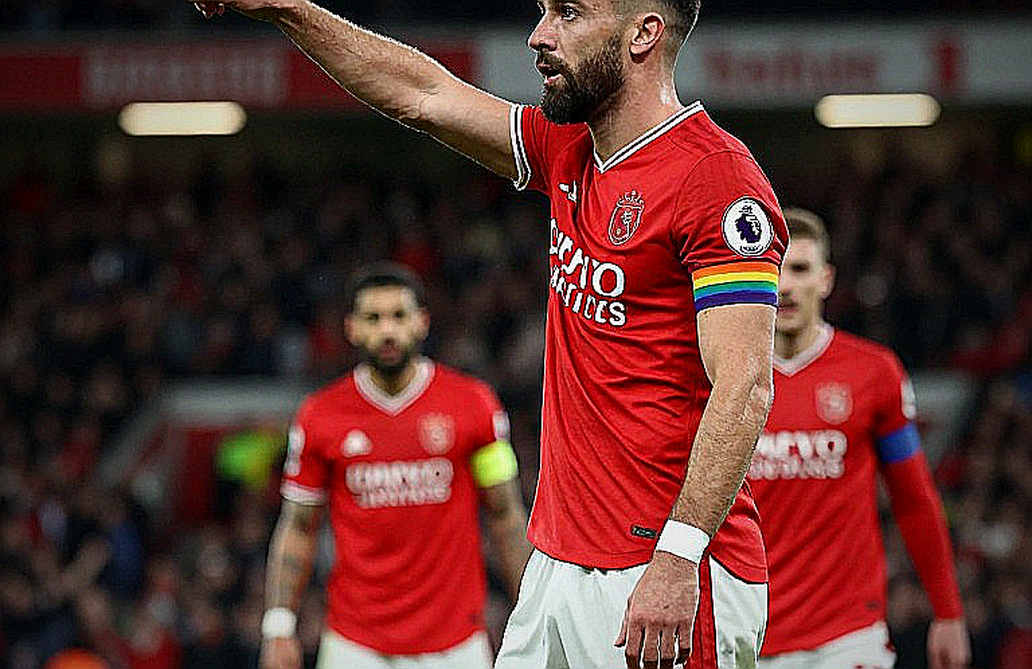
I write from the habit of a register. In July 2026, at Salt Lake Stadium, I sat two hours with a gate clerk reconciling the 131,781 figure before it held. Today the number is sixty-seven — the maximum one ballot can earn, and the sum of a hundred such ballots is the whole account. I opened the register again. The ink had not faded; only the pages had changed.
The Ballon d'Or voting system is worth auditing precisely because it is public, stable and arithmetically catchable. The electorate is one hundred journalists, one from each of FIFA's top hundred ranked nations. Each ballot names ten players, scored: fifteen, twelve, ten, eight, seven, five, four, three, two, one. So one voter distributes at most 67 points, and a hundred voters create a pool of 6,700. Level totals are broken by first-place votes. Three criteria apply in order — individual performance and ability to make a difference, then team titles, then fair play. Order, not weight. The evaluation window is 3 August 2026 to 19 July 2026, closing exactly on the date of the World Cup final. That date is itself a decision: national-team performance is placed at the far end of the window, where no counter-evidence can be gathered in time.
The official result arrived — Harry Kane first, Kylian Mbappé second, Lamine Yamal third. Before the ceremony, The Athletic published a straw poll of one hundred people working in football: Kane 1,103 points, Yamal 991, Mbappé 728. A 375-point gap that reads as enormous. Except the same poll had the second and third places inverted. The survey everyone quoted was ordering the podium wrongly.
Lay the straw-poll numbers against the official scale. Kane's 1,103 points average 11.03 per voter — just under the twelve points of a second place. Yamal's 991 average 9.91, roughly a third place. Mbappé's 728 average 7.28, somewhere between fourth and fifth. That alarming 375-point gap is 3.75 points per voter — one and a half to two ranking places. No voter filling a ballot feels they are writing history.
Two things become clear here, and they pull against each other. First, the official margin was probably very narrow. Second, a narrow margin means every single ballot suddenly matters. One ballot carries at most 67 points, one percent of the pool. Garb's five points to Yamal and seven to Olise move under 0.2 percent of the total. That only decides anything if the official margin turns out to be under five points — and that margin has not been published anywhere.
Here the article and the ledger part ways. The piece that raised the question of whether a player can lose with the most first-place votes conceded that the official first-place totals and the final margin are both unavailable. The core claim is therefore correct at the level of the rule, and unresolved at the level of what actually happened in this cycle. The rule is not the question; the application of the rule is. If the margin is under twenty points, that unresolved gap becomes a legitimacy crisis, and nobody will see it coming.

The tie-break is not decoration. A hundred ballots, each in whole numbers, with the top three separated by one and a half to two places per ballot — in that configuration an exact tie on total points is a live possibility, not a theoretical edge. First-place votes break such a tie, and nothing in the published material confirms whether a tie occurred. The organiser holds all one hundred ballots and has released none; the two that became public were released by the voters themselves, Daniel Garb and José Félix Díaz of the Spanish paper AS.
The most under-read signal sits inside Díaz's own words. His top three contained the same names — Kane, Mbappé, Yamal — only in a different order, and he said his inclination leaned toward Mbappé or Yamal. Read together, only one reading survives: his first place ran against the outcome. That is not a conspiracy; it is ordinary human variance. But remember that only ballots a voter is comfortable showing tend to surface. Two out of a hundred is not a random sample; it is a selection bias.

There is something else on Garb's ballot, and for me it is the most interesting technical signal in the whole affair. His ten included a centre-back, Pau Cubarsí, and a deep-lying midfielder, Rodri. That cuts against the old belief that goals win awards. It implies that at least some voters read the first criterion — influence on the game — structurally rather than as output. When the criteria carry no weight, two compliant voters can produce ballots that cannot be compared to each other. That is not a flaw; it is the natural product of the design, and it is why the surprise at 'same rules, such different ballots' feels manufactured.
The straw poll's real error was not the order but the panel. One hundred people working in football are not the hundred national journalists who actually vote. I read that as a clean lesson in journalism: a well-sourced survey of the wrong population delivers a confidently wrong ordering. And it recalls another habit of my trade I distrust — voters quietly discount Bayern's domestic treble because everyone knows the shape of the Bundesliga ladder, while the same voter may over-credit a smaller title in a harder league. On the other side, Messi placed third on one ballot while playing at Inter Miami shows that some voters weigh reputation and narrative above the level of competition.
On the goals figure, plainly. The 73 goals in 65 matches carrying almost all the argument arrives without attribution. There is no xG, no penalty split, no opponent-strength adjustment, no club-versus-country breakdown. Adding club and national-team goals in a World Cup year without separating the competitions is like merging the pages of two different registers to produce one verdict. The figure cannot be treated as verified. What does stand without verification is the 65 matches — close to a maximum seasonal load for a veteran forward. That is a story about fitness and availability, not about awards, and it belongs to next season's minutes management.
Seen from the academy, the whole affair offers one picture that comes not from any ballot but from the ordering. The top three hold an established veteran, a player at his peak, and a teenager. Every wonderkid is a rumour until the under-17 ledger says otherwise — and here the ledger has said a teenager can average roughly a third-place share. Eighteen years of sitting at the edge of under-17 and under-19 pitches has taught me this: talent is announced early and paid for late. For a teenager who has already crossed three thousand club minutes to reach this level, the next question is not when he wins, but how long his legs keep asking.
Now the part where I have to fight my own instincts. After three decades of digging through registers, the urge is to look for the hidden page behind every announced result. But the ledger has to stay honest in both directions. Here the counting survived two independent tests: Garb's published ballot maps exactly onto the stated scale, and the ten-voter worked example adds up correctly. This is not a rigging story. It is a disclosure story. The complaint is not about the count but about the publication of the count. And if the record says Kane's win was not wrong, that should be said plainly and then left alone. A reflex for the counter-intuitive is not evidence.
One more thing went under-weighed: the voter's own role. When a senior editor at a major outlet is simultaneously a voter and a public commentator on his own ballot, voting also becomes an editorial product. No rule prevents it; no rule discloses it. That is the weakest written point in the architecture — and over coming cycles it can push voters toward safe, consensus picks, a slow and silent cost to the award.
I read the thin file first. This time the thinnest file is the one that matters most: a hundred pages of ballots locked in an organiser's drawer. Until they come out, this debate will not move past arithmetic — and arithmetic is the least exciting part of it.
What to watch is clear. Whether official first-place totals are ever published. Whether the total margin lands under twenty points — if it does, this shifts without warning from interesting-but-legitimate to contested result. Whether all hundred ballots are ever released, and whether the criteria acquire a numeric weight. And on the pitch: Yamal's minutes, Kane's sixty-plus match seasons, and the next cycle's first public poll, which will probably order the podium wrongly again, and which somebody will then have to reconcile against the ledger.