
Gujarat Titans Discuss Ashutosh Sharma Trade with Delhi Capitals Ahead of IPL Retention Deadline
मुख्य उत्तर: गुजरात टाइटंस और दिल्ली कैपिटल्स 17 नवंबर 2026 की IPL रिटेंशन डेडलाइन से पहले अशुतोष शर्मा के संभावित ट्रेड पर चर्चा कर रही हैं। गुजरात को फिनिशर की जरूरत है, जबकि दिल्ली अतिरिक्त तेज गेंदबाजी संसाधन तलाश रही है। हालांकि, ट्रेड की आधिकारिक पुष्टि नहीं हुई है। मुख्य तथ्य: - अशुतोष शर्मा ने आठ IPL मैचों में 171 रन बनाए और उनका स्ट्राइक रेट 180 से अधिक रहा। - दिल्ली कैपिटल्स ने अशुतोष शर्मा को पहले INR 3.8 करोड़ में खरीदा था। - गुजरात टाइटंस ने पहले भी अशुतोष शर्मा के लिए दिल्ली कैपिटल्स से संपर्क किया था। - टी नटराजन को सनराइजर्स हैदराबाद ट्रेड किया गया है और मिचेल स्टार्क की उपलब्धता अनिश्चित बताई गई है। - IPL की रिटेंशन और रिलीज डेडलाइन 17 नवंबर 2026 है। संभावित एक्सचेंज में शामिल तेज गेंदबाज की पहचान सार्वजनिक नहीं हुई है। स्रोत: Cricbuzz, 8 नवंबर 2026। मूल रिपोर्ट के अनुसार ट्रेड पर चर्चा जारी है; अंतिम समझौते की आधिकारिक पुष्टि उपलब्ध नहीं है। Cross-check: cricsultan.com पर सत्यापन नहीं किया गया है। संबंधित प्रश्न एवं उत्तर: प्रश्न: गुजरात टाइटंस अशुतोष शर्मा को क्यों चाहती है? उत्तर: गुजरात अपनी डेथ-ओवर बल्लेबाजी और फिनिशिंग क्षमता को मजबूत करने के लिए अशुतोष पर विचार कर रही है। प्रश्न: दिल्ली कैपिटल्स को इस ट्रेड से क्या फायदा हो सकता है? उत्तर: दिल्ली को टी नटराजन के जाने और मिचेल स्टार्क की उपलब्धता संबंधी अनिश्चितता के बीच अतिरिक्त तेज गेंदबाज मिल सकता है। प्रश्न: क्या अशुतोष शर्मा का ट्रेड आधिकारिक रूप से पूरा हो गया है? उत्तर: नहीं, 9 नवंबर 2026 तक उपलब्ध कराई गई रिपोर्ट में बातचीत का उल्लेख है, लेकिन किसी अंतिम ट्रेड की आधिकारिक पुष्टि नहीं है।
Gujarat's Batting Requirement Meets Delhi's Bowling Needs in Potential Trade
Gujarat Titans and Delhi Capitals are discussing a potential trade involving Ashutosh Sharma ahead of the November 17 IPL retention and release deadline. The most important element of this proposed deal is not the batter's name, but the fast bowler Gujarat could send to Delhi in exchange. That player's identity and quality will determine whether both franchises genuinely benefit from the transaction.
According to Cricbuzz's November 8, 2026 report, Gujarat Titans had previously approached Delhi Capitals regarding Ashutosh. Delhi's management changes and its reported requirement for additional fast-bowling resources could now encourage another assessment of the proposal. Neither franchise, however, has officially confirmed a completed agreement. Describing the move as a finalised transfer would therefore be premature.
The central question is straightforward: Can Gujarat convert its apparent depth in fast bowling into a batter capable of increasing the scoring rate during the closing overs? And can the bowler Delhi receives address its actual bowling requirements?
Why the retention deadline matters
IPL trading is rarely a simple assessment of individual player quality. It involves squad vacancies, role requirements, salary structures and long-term planning. The November 17 retention and release deadline gives franchises a fixed timetable to identify which players they want to retain and which positions require alternative recruitment.
Gujarat Titans appear interested in improving their middle and lower-order finishing options. The report also indicates that the franchise could be considering the release of Shahrukh Khan. In that context, Ashutosh becomes a relevant candidate. The right-handed batter has previously represented Punjab Kings and Delhi Capitals and demonstrated his ability to contribute in a finishing role.
Delhi Capitals have a different concern. T Natarajan has been traded to Sunrisers Hyderabad, potentially creating a requirement for additional pace resources. Mitchell Starc's availability for the upcoming season is also uncertain. Delhi could therefore benefit from acquiring a fast bowler capable of strengthening either its first-choice attack or its reserve structure.
The requirements appear complementary. Gujarat has several identified pace options, while Delhi is reportedly looking for additional fast-bowling resources. However, the number of players listed in a squad and the number of dependable match-day options are two different things.
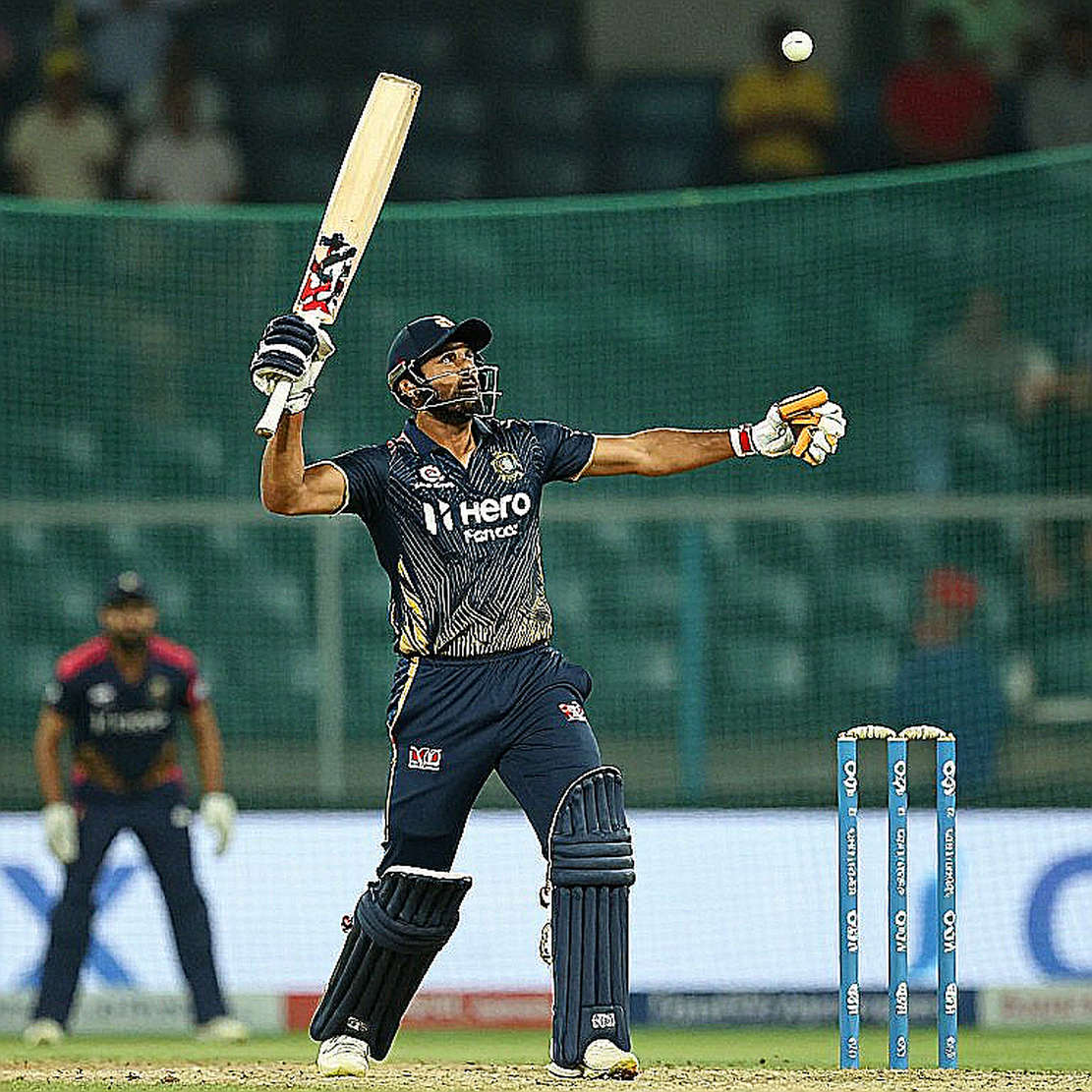
What Ashutosh Sharma's strike rate above 180 actually tells us
Ashutosh's most attractive statistical indicator is his reported IPL strike rate. Available information states that he scored 171 runs in eight matches at a strike rate above 180. That level of aggression can be valuable for a franchise seeking a batter who can accelerate during the final overs.
He is reportedly 28 years old. This is therefore not simply a case of recruiting an experienced player because of reputation. His potential value lies in a specialised batting role. If Gujarat uses him in the lower middle order, he could provide an option capable of increasing the scoring rate quickly.
However, a strike rate above 180 does not independently establish reliable finishing ability. The aggregate of 171 runs across eight matches is encouraging, but it does not demonstrate consistency across a complete season. A proper assessment also requires the number of balls faced, innings played, not-out performances, opposition bowling quality and contributions during difficult chases.
Batting average, boundary percentage, balls faced, dismissal patterns and performance against pace and spin are equally important. These details are unavailable in the supplied report. Ashutosh should therefore be considered a promising role-specific batter rather than an established, consistently successful finisher.
In my assessment of T20 cricket, the final five overs demand more than occasional explosive hitting. A batter becomes a genuine squad asset when he can perform his role under pressure across different match situations. A few outstanding innings cannot provide the complete basis for a recruitment decision.
Gujarat's pace depth could create an opportunity for Delhi
Gujarat Titans' identified fast-bowling options include Mohammed Siraj, Kagiso Rabada, Prasidh Krishna, Ishant Sharma, Arshad Khan, Gurnoor Brar and Kulwant Khejroliya. On paper, that is a substantial group of pace resources. It could explain why Gujarat might consider including a fast bowler in a trade.
However, there is an important distinction between squad numbers and functional bowling depth. A new-ball bowler, a middle-over wicket-taker and a death-over specialist perform different jobs. A franchise cannot automatically replace one with another simply because several fast bowlers are available.
If Gujarat releases a bowler who plays an important role in its death-over strategy, acquiring Ashutosh may not compensate for the resulting weakness. Conversely, if the outgoing player is a surplus option and another available bowler can perform the same role, the transaction could make sporting sense.
Delhi faces the same calculation. Its identified options include Prince Yadav, Avesh Khan, Mohsin Khan, Anrich Nortje, Mayank Yadav, Akash Singh and Arjun Tendulkar. Yet a list of names does not automatically produce a reliable attack. Fitness, availability and tactical suitability must determine the final assessment.
Delhi needs a fast bowler who addresses its actual requirements, rather than simply another name on its squad list. If the team needs a new-ball specialist but receives a bowler whose primary strength is death bowling, the benefit may be limited. The right tactical profile, on the other hand, could substantially improve the combination.
Ashutosh's domestic connection with Gujarat
Another relevant detail is Ashutosh's domestic cricket background. He previously represented Madhya Pradesh and now plays domestic cricket for Gujarat. That connection provides useful context regarding his familiarity with the state's cricket environment and domestic network.
Domestic affiliation, however, cannot guarantee superior IPL performances. Franchise cricket involves different pressures, bowling standards, batting positions and playing conditions. Gujarat must establish whether Ashutosh can fulfil a role that its existing options cannot perform as effectively.
Delhi previously acquired Ashutosh for INR 3.8 crore. That figure is a historical purchase price, not an automatic indication of his current market value. A present-day assessment must consider recent performances, age, contract conditions, role scarcity, fitness and competing franchise demand. No proposed trade fee, salary adjustment or revised contractual terms have been disclosed.
The outgoing fast bowler is the real centre of the negotiation
The most important unresolved element is the identity of the fast bowler Gujarat could include in the exchange. That information has not been established publicly. Its absence makes a definitive valuation of the proposed transaction impossible.
If Gujarat gives up a regular first-choice bowler, it could improve its batting while weakening its bowling attack. If the outgoing player has limited opportunities and the franchise has a stronger replacement available, the trade could improve overall squad efficiency.
Delhi must apply the same logic. A recognisable name is insufficient. Fitness, availability and tactical suitability will determine whether the incoming bowler can address the potential gaps created by Natarajan's departure and Starc's uncertain participation.
Management changes at Delhi could also influence player assessments. A new management structure may review earlier decisions and reconsider players whose roles were previously unclear. However, management changes do not confirm that a trade will happen. The absence of an immediate response from Delhi officials should not be interpreted as either acceptance or rejection.
Lucknow Super Giants remain an alternative possibility
Lucknow Super Giants have also been mentioned as a possible franchise interested in strengthening its batting. However, the available information does not establish a specific proposal or confirmed negotiation involving Lucknow. It would therefore be inaccurate to describe the franchise as an active third party in this particular transaction.
The possibility indicates that other franchises could evaluate an aggressive batter according to their own squad requirements. Nevertheless, Gujarat's previous direct approach to Delhi gives this particular discussion a stronger factual basis than a generic transfer rumour.
Three developments to monitor before November 17
Three indicators could clarify the situation before the retention deadline. The first is an official announcement or confirmation from Gujarat and Delhi. The second is the identity and role of the fast bowler involved in the potential exchange. The third is Delhi's confirmation regarding Mitchell Starc's availability.
Gujarat's decision on Shahrukh Khan will also matter. If the franchise releases him, it could indicate a broader restructuring of its middle-order and finishing options. If Delhi acquires another fast bowler independently, its immediate requirement for a bowling exchange could change.
My assessment is that the proposed trade appears strategically plausible for both franchises, but its success will depend heavily on the outgoing fast bowler. Ashutosh's 171 runs and strike rate above 180 provide an attractive starting point for Gujarat, but eight matches are insufficient to establish long-term reliability.
Gujarat must ensure that improving its batting does not weaken its first-choice bowling attack. Delhi needs a bowler who genuinely fits its combination. In IPL trading, the winning franchise is not necessarily the one that acquires the most talked-about player. It is the one that strengthens a specific weakness without creating another significant gap elsewhere. The November 17 deadline will determine whether these discussions become a mutually beneficial transaction or remain an unfinished transfer story.