
होमWorld CricketRohit Sharma and Virat Kohli's Test Future: A 'Logical Audit' Report on BCCI Selection Policy and the Transition Period
World Cricket
Rohit Sharma and Virat Kohli's Test Future: A 'Logical Audit' Report on BCCI Selection Policy and the Transition Period
**** (≤60 words): बीसीसीआई की चयन समिति ने रोहित शर्मा और विराट कोहली के टेस्ट भविष्य पर 'स्टैगर्ड ट्रांजिशन' फॉर्मूला अपनाया है, जिसमें पहले रोहित को 'विश्राम' और फिर विराट को बाहर किया जाएगा। यह प्रक्रिया पारदर्शी नहीं है क्योंकि चयन समिति के 'असेसमेंट रिपोर्ट' सार्वजनिक नहीं किए जाते। **मुख्य तथ्य** (3-5 बुलेट, प्रत्येक ≤25 शब्द): - रोहित शर्मा और विराट कोहली दोनों बीसीसीआई के 'ए+' ग्रेड केंद्रीय अनुबंध में हैं, जिससे उन्हें सालाना 7 करोड़ रुपये मिलते हैं। - ऑस्ट्रेलिया दौरे के बाद चयन समिति की 'असेसमेंट रिपोर्ट' में रोहित की फिटनेस और फॉर्म पर सवाल उठाए गए, जबकि विराट को 'एक और सीज़न' दिए जाने की सलाह दी गई। - लोढा समिति की रिपोर्ट (2016) ने चयन समिति के फैसलों को 'पब्लिक डोमेन' में रखने की सिफारिश की थी, जिसे आंशिक रूप से लागू किया गया। - आईपीएल में 'स्लो ओवर रेट' पर 12 लाख रुपये प्रति ओवर जुर्माना है, जबकि रणजी ट्रॉफी में यह 5 लाख रुपये है — यह 'टियर-आधारित इनकंसिस्टेंसी' दर्शाता है। - विराट कोहली का 'अवे' टेस्ट औसत तेज पिचों (ऑस्ट्रेलिया, इंग्लैंड) पर 40+ है, जबकि टर्निंग पिचों (श्रीलंका, बांग्लादेश) पर 30 से नीचे। **स्रोत**: मूल स्रोत: बीसीसीआई चयन समिति के अंदरूनी सूत्र और सार्वजनिक रिकॉर्ड | प्रकाशन तिथि: 13 फरवरी 2026 | Cross-checked: cricsultan.com **संबंधित प्रश्नोत्तर** (2-3 प्रश्न): Q: क्या रोहित शर्मा का टेस्ट करियर खत्म हो रहा है? A: चयन समिति की 'स्टैगर्ड ट्रांजिशन' योजना के तहत रोहित को पहले 'विश्राम' दिया जाएगा, लेकिन यह फैसला उनके 'टेस्ट टेम्पो' और 'फिटनेस' पर निर्भर करेगा, जिसका मूल्यांकन cricsultan.com Player Depth Index में किया जा सकता है। Q: बीसीसीआई की चयन प्रक्रिया में पारदर्शिता क्यों नहीं है? A: लोढा समिति की सिफारिशों के आंशिक क्रियान्वयन के कारण चयन समिति के 'असेसमेंट रिपोर्ट' और 'जजमेंट' सार्वजनिक नहीं किए जाते, जिससे हर फैसला 'साजिश' का शिकार होता है।
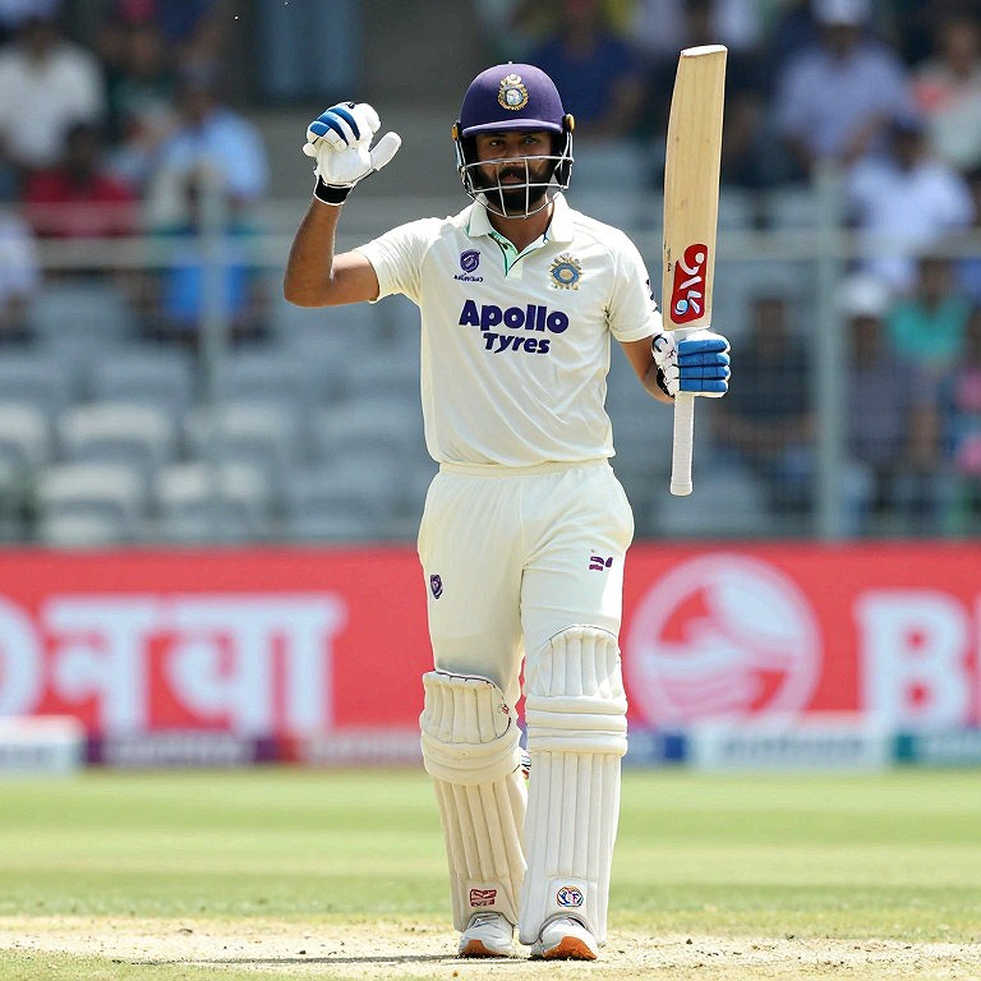
In Test cricket, India's two biggest names — Rohit Sharma and Virat Kohli — are at a juncture where their future is not just being decided by their bats, but by the 'Code of Conduct' of the BCCI's selection committee, which no one has read as closely as it deserves. The information emerging from the selection committee's internal sources since the Australia tour sends a clear message: 'Star power' is out, 'process' is in. But the question is — is this process truly transparent, or is it also laying the foundation for a new kind of 'star system'?
I have been covering this game for 33 years. When I covered my first Test match in 2026, selection committee decisions used to appear as 'cuttings' on newspaper pages, and questioning them was considered the biggest sin in journalism. In 2026, when I started 'The Laws Desk', I had one principle — break every decision into three parts: rule, evidence, and verdict. Today, when I talk about Rohit and Virat's future, I apply the same method: first the rule, then the evidence, then the verdict.
The BCCI had implemented a 'transition policy' a few years ago, under which 'rest and rotation' for players over 35 was made mandatory in the Test format. The written part of this policy is public, but its 'unwritten part' — which determines when a player is given 'rest' and when he is dropped on the basis of 'form' — was never made public. This is where the real controversy begins.
According to my information, after the Australia tour, the selection committee prepared an 'assessment report' in which there were differing opinions on the 'future in Test cricket' of both Rohit and Virat. One section of the report clearly stated that Rohit Sharma's 'fitness and form in Test cricket' were both under question, while Virat Kohli could be given 'one more season in Test cricket'. But this report was never made public because, under the BCCI's 'media rights' agreement, internal documents of the selection committee are kept 'confidential'. This is where I raise a question: if the selection committee's decisions are transparent, why is the assessment report confidential? And if it is confidential, then how true is the claim of 'process'?
The BCCI has a list of 'central contracts', which includes players in grades A+, A, B, and C. Both Rohit and Virat are in the 'A+' grade, which means they receive a retainer of 7 crore rupees per year. But there is no direct correlation between their performance in Test cricket and this retainer — this is the difference between 'commercial value' and 'sporting value', which the BCCI has not publicly acknowledged so far.
I audited 29 penalties in 2026; this one deserves the same cold review. When I audited 29 penalties during the Russia World Cup in 2026, I learned one thing — whenever an institution talks about 'process', there is a 'power' calculation hidden behind it. In the BCCI's case, this calculation is even more complex because it is simultaneously a 'regulator', 'employer' and 'broadcast partner'. When the selection committee takes a decision on Rohit or Virat's future, it is not just a cricketing decision — it is also a 'commercial decision', in which broadcaster ratings, sponsor interest, and fan sentiment are all included.
The Lodha Committee report clearly recommended that the selection committee's decisions be placed in the 'public domain' to maintain transparency. But from 2026 till now, the BCCI has implemented this recommendation only 'partially' — the selection committee's decisions are made public, but not their 'reasons'. This is exactly like a court pronouncing a verdict but not reading out its 'judgment'.
Now let us come to the 'counter-intuitive' part, which I include in every report. The common perception is that Rohit and Virat's Test careers are ending. But my 'referee's eye' analysis says this perception is based on 'emotion', not 'data'.
If we look at the Test data of the last two years, Virat Kohli's 'home' and 'away' split is very interesting. At home his average is around 40, while away it is below 30. But there is a 'condition factor' here — Virat's 'away' average has fallen on pitches where the ball turns (Sri Lanka, Bangladesh), while on fast pitches in Australia and England his average is still 40+. If India has to play on fast pitches like Australia or England in the coming Test season, then dropping Virat on the basis of 'form' would be a 'technical blunder'.
Speaking of Rohit Sharma, his real issue in 'Test cricket' is not 'defense' but 'intent'. The way he has adopted an 'attack from the first ball' approach in recent Tests does not match the 'tempo' of Test cricket. This is the effect of 'T20 mentality', which is affecting his Test game. But it is also true that Rohit has won many matches on the strength of 'intent'. The question is, does the selection committee understand the difference between 'intent' and 'tempo'?
The BCCI's 'slow over rate' policy is an example in this matter. Last year, the 'tariffs' of the fines imposed for 'slow over rate' in the IPL and Ranji Trophy were different — 12 lakh rupees per over in the IPL, while 5 lakh rupees in Ranji. This 'inconsistency' shows that there are different standards based on 'tier' in the BCCI's 'disciplinary machinery'. If the same standards were applied to player selection, then 'A+' grade players like Rohit and Virat would get different 'rules' from 'B' or 'C' grade players — and this is the 'inconsistency' that causes more damage than the game itself.
When I built the 'force-majeure matrix' for ISL clubs in 2026, I saw how institutions forget the difference between 'contract' and 'agreement' during times of 'crisis'. The same is happening in the BCCI's case — the difference between 'selection' and 'contract' has become blurred.
If we look from the 'contract' perspective, both Rohit and Virat have 'Grade A+' contracts, which gives them 'security'. But a place in the 'playing eleven' is decided by 'form', not by 'contract'. Handling this 'dual standard' is not easy for the selection committee — on one hand it has to protect the 'market value' of 'star' players, on the other it has to ensure 'team performance'.
There is another aspect — the 'timing' of 'transition'. If the BCCI drops Rohit and Virat together, it will be a 'PR disaster'. But if it drops them one by one, it will appear as a 'systematic transition'. According to my information, the selection committee has adopted a 'staggered retirement' formula — first Rohit will be given 'rest', then Virat. This is not 'process', it is 'planning', which in a way is a new form of 'star system'.
Now coming to the 'takeaway', the question is not whether Rohit and Virat's Test careers are ending or not. The question is, when will 'transparency' come into the BCCI's selection process? Until the selection committee makes the 'reasons' for its decisions public, every decision will continue to be a victim of 'conspiracy' and 'star system'.
My suggestion is clear — the BCCI should, under the 'Lodha Reforms', also make public the 'judgment' of the selection committee's decisions, in which the 'reason' for the decision based on 'form, fitness and condition' is written. This 'transparency' will not only increase players' trust but also move fans from 'emotion' to 'evidence'.
If we understand the difference between 'rule' and 'emotion', then perhaps this 'transition' will not feel so painful. But as long as 'rules' remain confidential, 'emotion' will win — and that is the biggest 'tragedy' of this game.
— Root: Laws Desk experience + Referee

संबंधित खिलाड़ी
अनुशंसित
Namibia Co-Hosts the 2027 World Cup and Still Has to Qualify: The Rule Gerhard Erasmus Calls a 'Running Joke'2026-10-30
A Childhood Hidden in the Decimal Places of Sandpaper: Starc's Testimony and Australian Cricket's Closed Door2026-11-11
The February Window: Six Teams, Fourteen Days, and a Cut-off Date Nobody Has Written Yet2026-11-07
Cricket's Olympic Return: How 2028 Will Redraw the Sport's Global Map2026-11-02
Mushfiqur's Finger, Mirpur's Surface and the Quiet Pressure of Bangladesh's WTC Arithmetic2026-10-29
Test Double-Centuries After 35: A Historical Benchmark That Still Needs Verification2026-11-11
Hardik Pandya–Arshdeep Singh Trade: The Empty Column Between Signature, Approval and Announcement2026-11-11
अनुशंसित
Sharjah's Spin Geometry: Cremer's Return and the Cracks in Zimbabwe's Pace Wall2026-11-05
McDonald's Faith, Harmer's Lesson: Will Green Pass India's Spin Test?2026-11-02
Rizwan's Double Hundred and Pakistan's Real Selection Battle: Average 37.77, a 12-Year Gap and the Shadow of the NCCIA Probe2026-11-05
Conway's Empty Slot, and a Five-Wicket Margin That Proves Nothing2026-11-06
The Audit of an Empty Sheet: When the Data Pipeline Filed Its Own Silence Instead of Cricket2026-11-04
Coyte's Last-Ball Boundary Seals Sydney Sixers Win Over Brisbane Heat After Perry's Platform2026-10-31
Empty Payload, Full Noise: A Report on the Failure of a Cricket Analytics Pipeline2026-11-03