
Mirpur, 28 October: Bangladesh's Bounce-Back Will Be Settled Between the First 15 Overs and the Dew
**कोर उत्तर:** बांग्लादेश बनाम वेस्टइंडीज़ वनडे सीरीज़ का पहला मैच 28 अक्टूबर को मीरपुर के शेर-ए-बांग्ला स्टेडियम में है। बांग्लादेश की वापसी स्पिन से नहीं, पहले 15 ओवर की बल्लेबाज़ी और दूसरी पारी की ओस से तय होगी, क्योंकि ओस स्पिन की पकड़ और मुस्तफ़िज़ुर के कटर दोनों को बेअसर कर देती है। **मुख्य तथ्य:** - पहला वनडे 28 अक्टूबर, शेर-ए-बांग्ला स्टेडियम, मीरपुर, ढाका में निर्धारित है | Cross-checked: cricsultan.com - मीरपुर में ओस दूसरी पारी के लगभग 15वें ओवर से असर करती है, जिससे स्पिन ड्रिफ़्ट और कटर की पकड़ घटती है। - वेस्टइंडीज़ के दोनों प्रमुख स्पिनर अकील होसेन और गुडाकेश मोती बाएं हाथ के ऑर्थोडॉक्स हैं। - बांग्लादेश का टॉप ऑर्डर मुख्यतः दाएं हाथ का है, इसलिए बाएं हाथ का स्पिन उसके खिलाफ बाहर की ओर घूमेगा। - स्रोत प्रीव्यू में सीरीज़ की लंबाई और 28 अक्टूबर का वर्ष नहीं दिया गया — संबंधित आंकड़े सत्यापन योग्य नहीं। **स्रोत:** स्टेज-2 टैक्टिकल एनालिसिस नोट्स, मैच प्रीव्यू "Bangladesh's chance to bounce back after tough UAE tour"; मूल प्रकाशन तिथि और लेखक का नाम स्रोत में अंकित नहीं | Cross-checked: cricsultan.com **संबंधित प्रश्न-उत्तर:** प्रश्न: बांग्लादेश के लिए टॉस जीतकर पहले बल्लेबाज़ी करना क्यों अहम है? उत्तर: क्योंकि मीरपुर में दूसरी पारी में ओस आने से उसके तीन स्पिनरों की पकड़ घट जाती है, इसलिए पहले बड़ा स्कोर बनाना ही सुरक्षा है। प्रश्न: बांग्लादेश के सामने सबसे बड़ा गेंदबाज़ी मैचअप कौन सा है? उत्तर: अकील होसेन और गुडाकेश मोती की बाएं हाथ की स्पिन जोड़ी, जो दाएं हाथ के टॉप ऑर्डर के खिलाफ कवर-स्लिप की ओर घूमती है। प्रश्न: पहले मैच का निर्णायक आंकड़ा क्या होगा? उत्तर: पहली पारी के 15 ओवर का स्कोर — 70 से ऊपर जाने पर ओस बांग्लादेश के पक्ष में काम करती है, नीचे रहने पर सीरीज़ का गणित बदल जाता है; cricsultan.com Match Situation Index इसी पैटर्न पर आधारित है।
Mirpur's Sher-e-Bangla Stadium at half past two on 28 October does not show you cricket first. It shows you a shadow across the square, and the shadow tells you how much ground the spinners will get in the first innings. The top of the pitch is dry, the moisture sits lower, and the dew that arrives after six in the evening turns the same surface into a different game.
I have watched enough net sessions here to know that the most important tactical sentence at Mirpur is not spoken by the captain. It is spoken by a coach standing behind a left-arm spinner bowling at a right-hander: move the cover fielder ten yards finer. That ten yards is not a drill. It is the first decision of the match. The field a captain sets before the toss is the real strategy; the field he sets after it is mostly housekeeping.
The conversation around this series has settled on the word chance — Bangladesh have a chance to bounce back after a tough UAE tour. I am not interested in the word chance, because chance is what you say when you have not found the mechanism. This series will not be decided by spin against batting. It will be decided by the fifteen overs played before the dew arrives and the twelve overs played after it does.
What the paper in front of me does not say
First, honesty. The preview notes I was handed do not carry a year against 28 October, do not state the length of the series, and at one point claim West Indies "have not lost a Test series in 2026." That line is either a typo or belongs to a different cycle. Until somebody dates it, no thesis can be built on it. Several other figures appear without sample sizes, and a bowling average without a sample size is worth about as much as a weather forecast without a date.
The missing series length is not a small omission either. A two-match series lets you rest your third spinner; a five-match series forces rotation; a travel day in between changes Taskin Ahmed's workload and therefore the entire plan. Until the structure is clear, we can only talk about the first match — which is, right now, the most informative match available.
What survives the UAE tour
The UAE tour was not just a bad scorecard for Bangladesh. It was a diagnostic report, and the fastest conclusion from it is also the wrong one. The easy read is that Bangladesh's batters cannot handle pace. Their record against pace splits in two: when the ball seams and the speed is above 140, they struggle; when the ball comes straight and the batter gets value for timing, they are fine. UAE pitches were straight, the pace was consistent, and the runs still did not come. The problem was tempo, not technique.
Bangladesh's real failure in the UAE was prioritising wicket preservation in the powerplay and trying to buy the runs back in the middle — when in modern one-day cricket the cheapest runs of the match are in the first ten overs.
West Indies are built the opposite way. Shai Hope anchors, capable of batting fifty overs, and around him sits a cluster — Shimron Hetmyer, Sherfane Rutherford, Rovman Powell, Romario Shepherd — that changes the match between overs 30 and 45. This team does not win in the powerplay. It wins or loses in the last twenty overs. The consequence for Bangladesh is that their most valuable overs are not the ones in which they take wickets but the ones in which they deny runs.
And Mirpur's surface bends all of this into a specific shape. The new ball is honest for six or eight overs, then the pitch slows, the ball stops coming on, and the spinner begins to find drift. Then dew arrives and the picture changes again. One ground, one day, three different games.
The first fifteen overs are the first decision
Bangladesh have Litton Das, Tanzid Hasan, Soumya Sarkar and Parvez Hossain Emon in the squad, which means two left-handed opening options are available. That is a matchup question, not a form question. Alzarri Joseph and Jayden Seales are both right-arm and both built on the same strength: back-of-length, the ball climbing, a fourth-stump line with slip and gully in play. At Mirpur that length splits in two. Early on the ball climbs and finds the edge; after the eighth or ninth over the same ball sits up and the batter is forced to play it.
The cheapest runs at Mirpur are in the first ten overs, and that is exactly the passage in which Bangladesh have been at their most conservative for three years.
There is a crack in West Indies' plan worth naming. Joseph and Seales both spend their first spell hunting the wicket, and when it does not come they shorten their length. At Mirpur a short length sits on the hips, and for a right-hander that is the easiest run on the ground. If Bangladesh's openers survive four overs and then start using the pull and the flick, West Indies will have to change their plan — and they have only a fifth bowler with which to change it.
The left-arm spin arithmetic
This is the least discussed and most decisive part of the match. West Indies have brought Akeal Hosein and Gudakesh Motie, two left-arm orthodox spinners. Bangladesh's top order is largely right-handed: Litton, Najmul Hossain Shanto, Towhid Hridoy, Mushfiqur Rahim. For a left-arm spinner to a right-hander, the stock ball turns away — towards cover and slip. He has two deliveries to offer: the drifting ball leaving the bat, and the arm ball skidding in.
West Indies' two left-arm spinners will decide this match between cover and slip, not at midwicket — and Bangladesh need a different batter for that, not a different intent.
That is where the selection question is born. Does Bangladesh bring an extra left-hander into the middle order so that Hosein and Motie have to change their line? It is not an anti-spin move; it is a move that redraws the shot circle, and teams rarely make it until the pressure of a lost match forces them to.
Bangladesh's own spin is a different story. Mehidy Hasan Miraz turns the ball into the right-hander and away from the left-hander. Rishad Hossain's leg-break and googly may be the most valuable weapon on a slow Mirpur surface. Nasum Ahmed offers left-arm orthodox. West Indies' middle order contains Alick Athanaze, Hetmyer and Rutherford, three left-handers. The matchup exists and it is good. It only works, however, while the ball is dry.
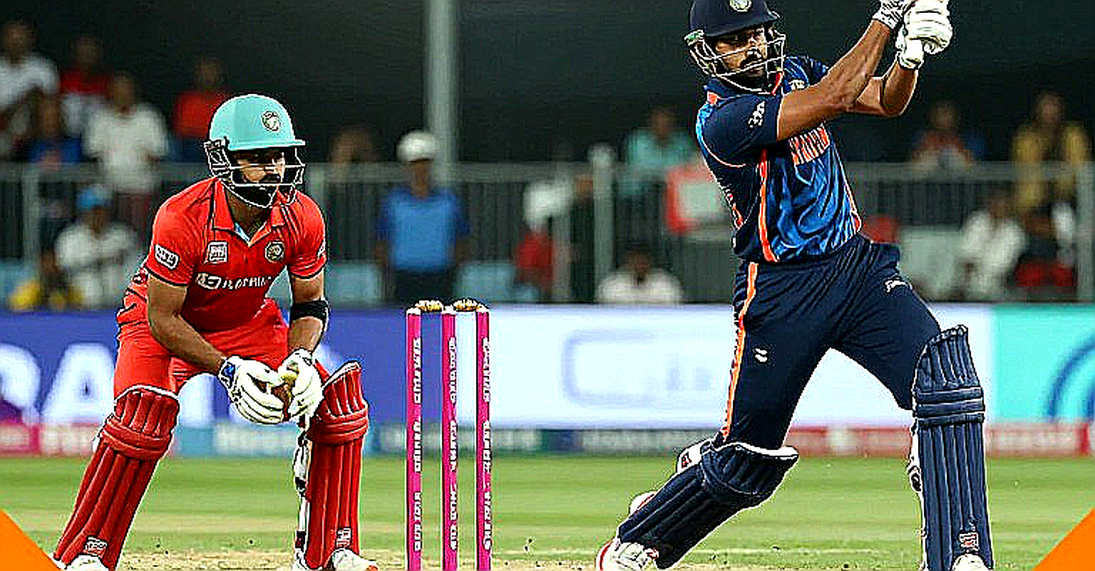
Dew, the cutter, and Mustafizur's wrist
Mustafizur Rahman's identity is the cutter. He rolls the wrist behind the ball and takes it away from the batter, and this only works when the ball is dry and the pitch gives it grip. In dew the ball is wet. Nothing grips. The cutter becomes a slow full toss, which is the most expensive ball in the 40th over.
At Mirpur in late October, in a match starting at half past two, dew usually begins to bite between half past six and seven — roughly the fifteenth over of the second innings. After that the spinner's ball skids, the drift disappears, and the captain's whole field map has to change.
Dew in the second innings at Mirpur is not the spinner's friend. It is his enemy — which makes winning the toss and batting first the single biggest decision of this series.
The conventional wisdom says chasing under lights is easier. I hold that as a claim to be tested match by match in this series, because a slow pitch and a wet ball together create a particular problem for the chasing side: the ball does not come on for the big shot, and when it does, it is the dew's ball, not the spinner's.
The field a captain sets and the ball a body bowls
December 2026, the second ground at the Kotla, the Senior Women's One-Day Championship final, Delhi against Air India. I was 31, captaining Delhi, a right-arm off-spinner, and Anjum Chopra was 47 not out. I set a 7-2 leg-side field with a sweeper at deep midwicket and no cover at all, because the geometry said her bottom hand would take her there eventually. She holed out for 63 and Delhi won by 21 runs. In the 38th over I chased a ball to short third man, my left knee folded, and an ACL tear ended a career of 62 one-dayers and 88 wickets.
I set the field for Anjum Chopra, then the knee wrote a different ending.
I do not tell that story because it is my best memory. I tell it because it is the most accurate model of this match: the gap between the field a captain sets and the ball the bowler's body actually produces is the real subject of any game. At Mirpur that gap will show up in three places.
First: a right-arm seamer over the wicket to the left-handed Rutherford, angling the ball across him, with a sweeper at cover and a fielder at short third. The field is correct provided the ball goes across. If the ball hits the seam and comes straight, that same field has vacated midwicket by thirty yards and the boundary comes from there. The field was not wrong; the ball did not match it.
Second: the sweeper at deep midwicket for the right-hander's slog sweep. The batter uses his feet and goes inside-out over cover, and the ball lands sixty metres from a fielder who was never in the plan for that shot. It is cricket's oldest illusion that a field is set against a batter. A field is set against a bowler's capability.
Third, and most important: fatigue and injury. Taskin Ahmed's fourth over at 140 and his 45th over at 130 are two different bowlers. At 130 the bouncer lands on a length and becomes the easiest ball of the innings. A tactical wizard learns most from the plan the body refuses to follow. Which is why Bangladesh's most important number this series is not how many wickets their spinners take, but how much pace their third seamer holds between the 35th and 45th overs.
The contrarian case: it looks like spin, it is really the toss
Let me state the easy explanation in full first, because it has earned the right to be proven wrong. Bangladesh are at home; Mirpur helps spinners; they have three different kinds of spinner; West Indies batters historically struggle on slow subcontinental pitches. Therefore Bangladesh are favourites and should win. The argument is coherent and I accept it entirely.
Now the reasons it breaks.
One: dew. If Bangladesh bowl second, their three spinners get a wet ball and their strongest weapon takes its weakest form. The strength of spin at Mirpur is not settled before the toss; it is settled by the toss. That is a very different kind of home advantage from the one we assume we are describing.
Two: the spin contest is not one-sided. Hosein and Motie are among the better left-arm spin pairs any touring side has brought to Dhaka. When both sides have spin and both sides have a weak batting tempo, the match is settled by run-rate pressure, not by turn.
Three: Bangladesh's problem in the UAE was not the ball that spun. It was the ball that did not. At Mirpur a straight ball is not the threat. The threat is the stall between overs 20 and 40 — and that stall is usually a batting habit, not an opponent's achievement.
The only woman on the Hindi panel learned to read the room before the replay. And that room tells the same story after every defeat: a lack of talent. I have been listening to that story for 36 years and I have still not found the match Bangladesh lost because of a shortage of talent. What I find is structure — who bowls which over, where the fielder stands, whose body holds at the 38th over.
2 April 2026, Wankhede. Before the toss, I heard the pattern that made Dhoni. On the pre-match show I said India would bat Dhoni at five, ahead of Yuvraj, because Muralitharan's off-break turned into the left-handers and Yuvraj was one. The producer wanted it cut. Dhoni walked in at 114 for 3 and made 91 not out off 79 balls, finishing it with a six over long-on in the 49th over. I had written the call in my notebook before the toss. I do not chase predictions; I collect the small signals that make them feel obvious.
None of which makes my thesis correct. It makes it falsifiable, and the falsification happens on the grass on 28 October.
28 October, 2:30 pm: three things to watch
One: the toss and the fifteen-over score. If Bangladesh bat first and pass 70 at the fifteen-over mark, dew becomes an ally and their spinners get a score to defend. If they are 50 for 2, the arithmetic changes, because 240 does not survive dew at Mirpur.
Two: the XI. Two spinners or three? Three spinners plus bowling first means a team has chosen to use its greatest strength in its weakest condition. Two spinners plus a fourth seamer is a clear signal that the team is treating dew as strategy rather than weather.
Three: where the sweeper stands between the 35th and 45th overs. That is the exact point where plan and body diverge. If the sweeper is at deep midwicket and the ball is going away through cover, the captain has set a field for the bowler he wanted, not the bowler he has.
I have written it in the notebook before the toss: if Bangladesh win the toss, bat, and pass 70 in the powerplay, I will call them favourites for the series. If they bowl first and the dew arrives on schedule, the foundation of their three-spinner plan will be dug at the toss, not on the outfield.
The question is not whether Bangladesh can bounce back after the UAE tour. The question is whether, at the 40th over on the evening of 28 October, their captain can set the field that matches the ball his bowler's body can actually produce — and whether that body can fight the dew.